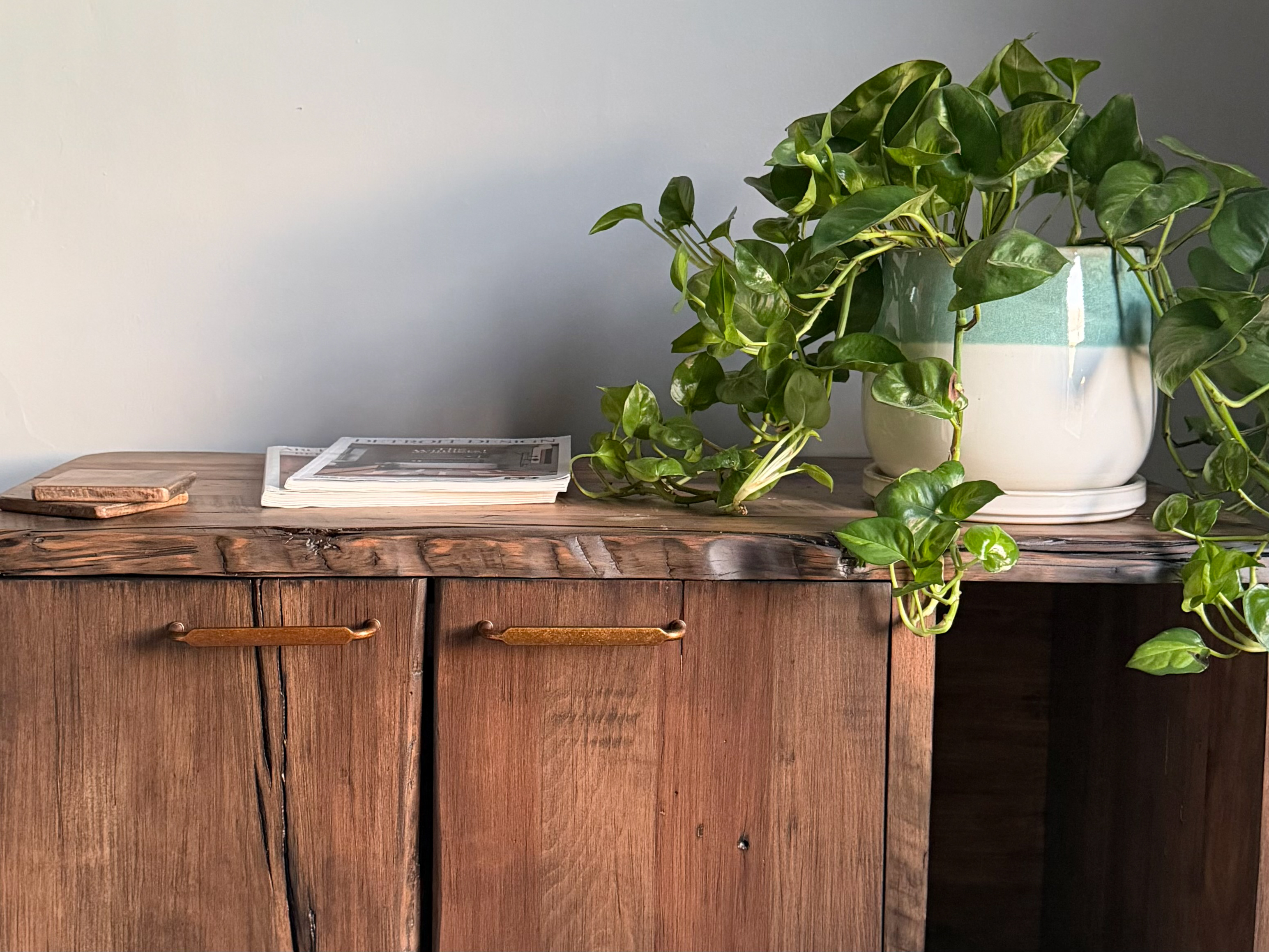
Convertible Staircase Bar
Developed for a residential renovation project, this custom solution transformed an exposed stairwell into a functional entertaining space. The client requested a bar-height countertop that could be stowed away when not in use, requiring the development of a system that balanced usability, spatial constraints, ergonomics, and manufacturability.
Working from only the dimensions of the renovated stair opening, I established the design criteria, evaluated material thicknesses, developed the track system, and determined the functional clearances required for safe use. Human factors played a significant role in the project, as the design needed to accommodate users with substantially different heights while maintaining comfortable passage along the staircase below.
Using Blender, I created a full-scale digital model to validate dimensions, sight-lines, and user clearances before fabrication. The final design incorporated a fixed countertop, a concealed rolling work surface, and a removable extension leaf that expanded the usable surface area when entertaining. Through careful planning and dimensional control, the project was fabricated and installed without requiring any modifications to the original design.
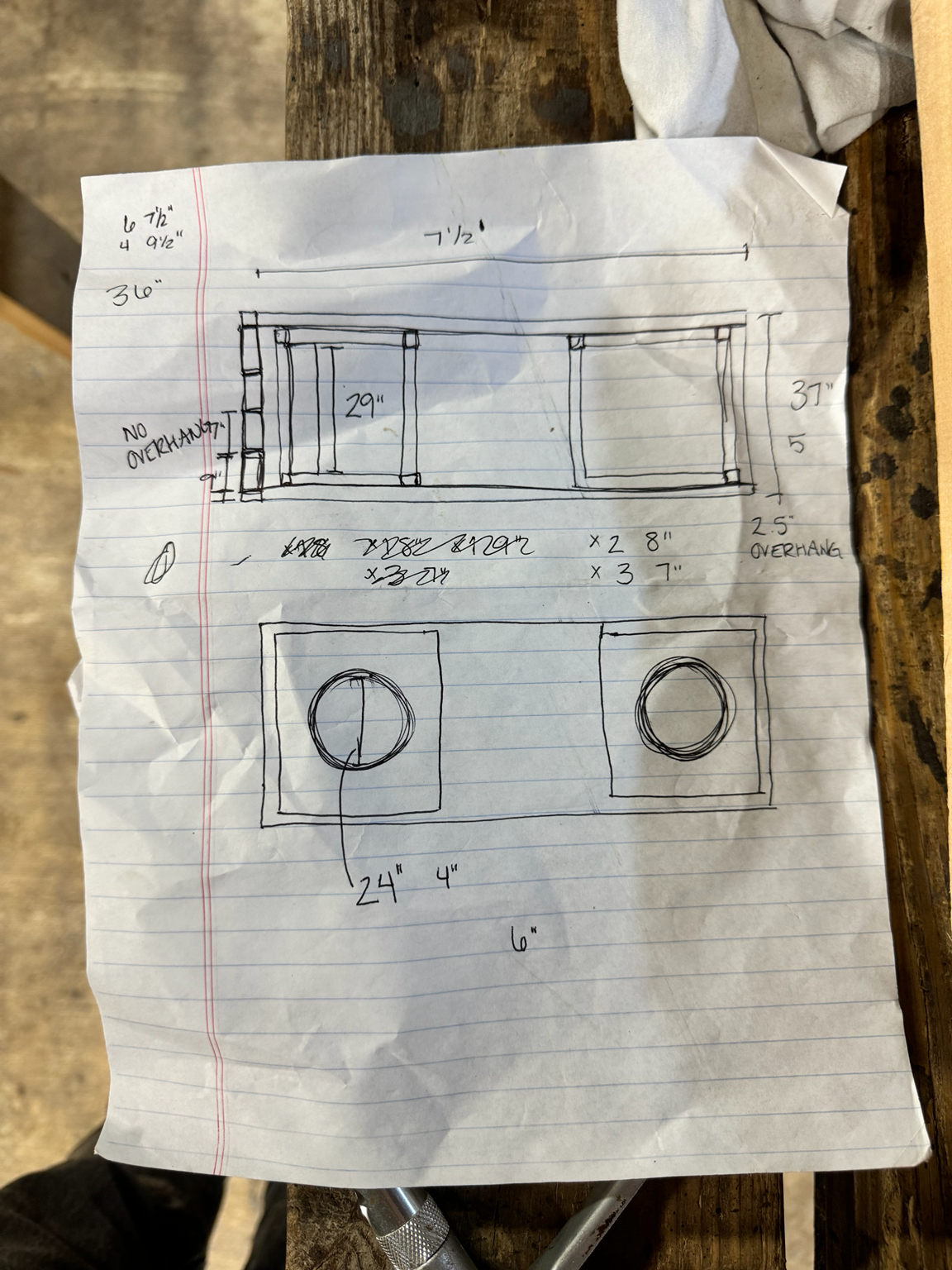
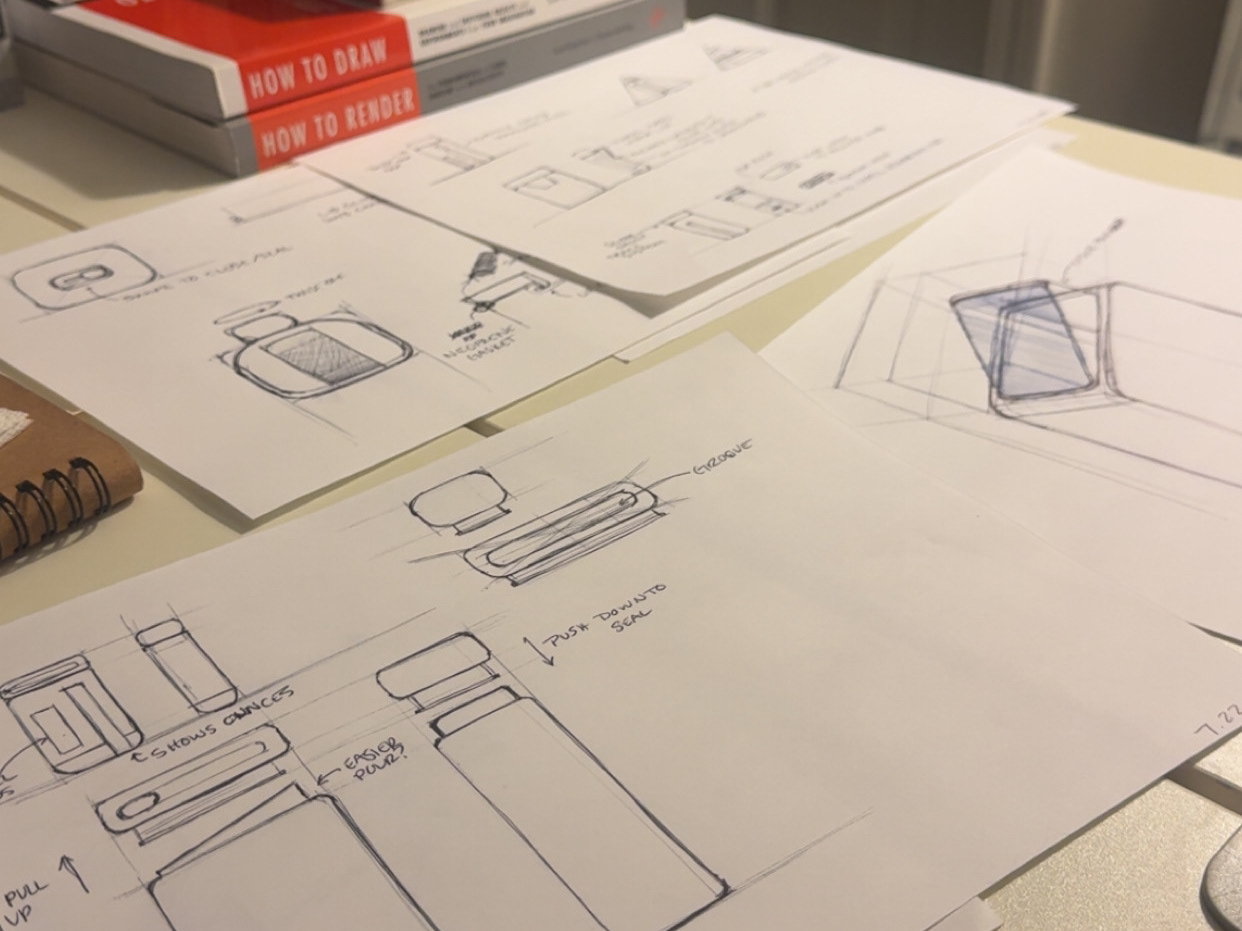
Initial concept sketches were used to establish dimensional requirements, user clearances, and the overall functional layout of the system before digital development began.
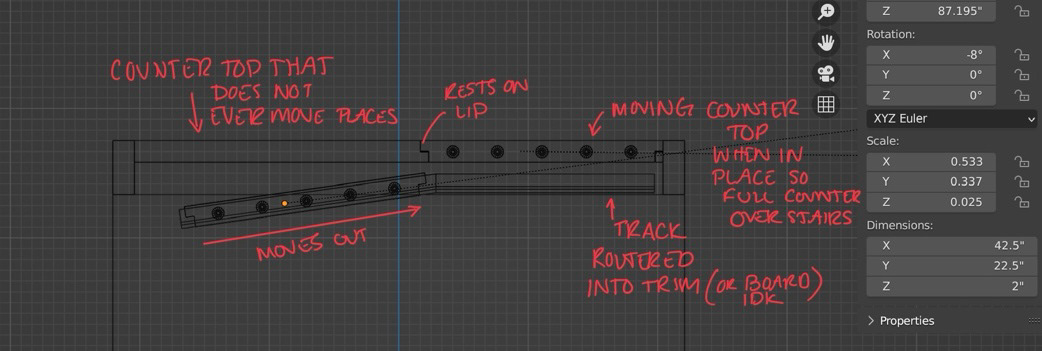
A full-scale digital model was developed in Blender to evaluate user ergonomics, countertop placement, stair clearance, and the retractable track mechanism prior to fabrication.
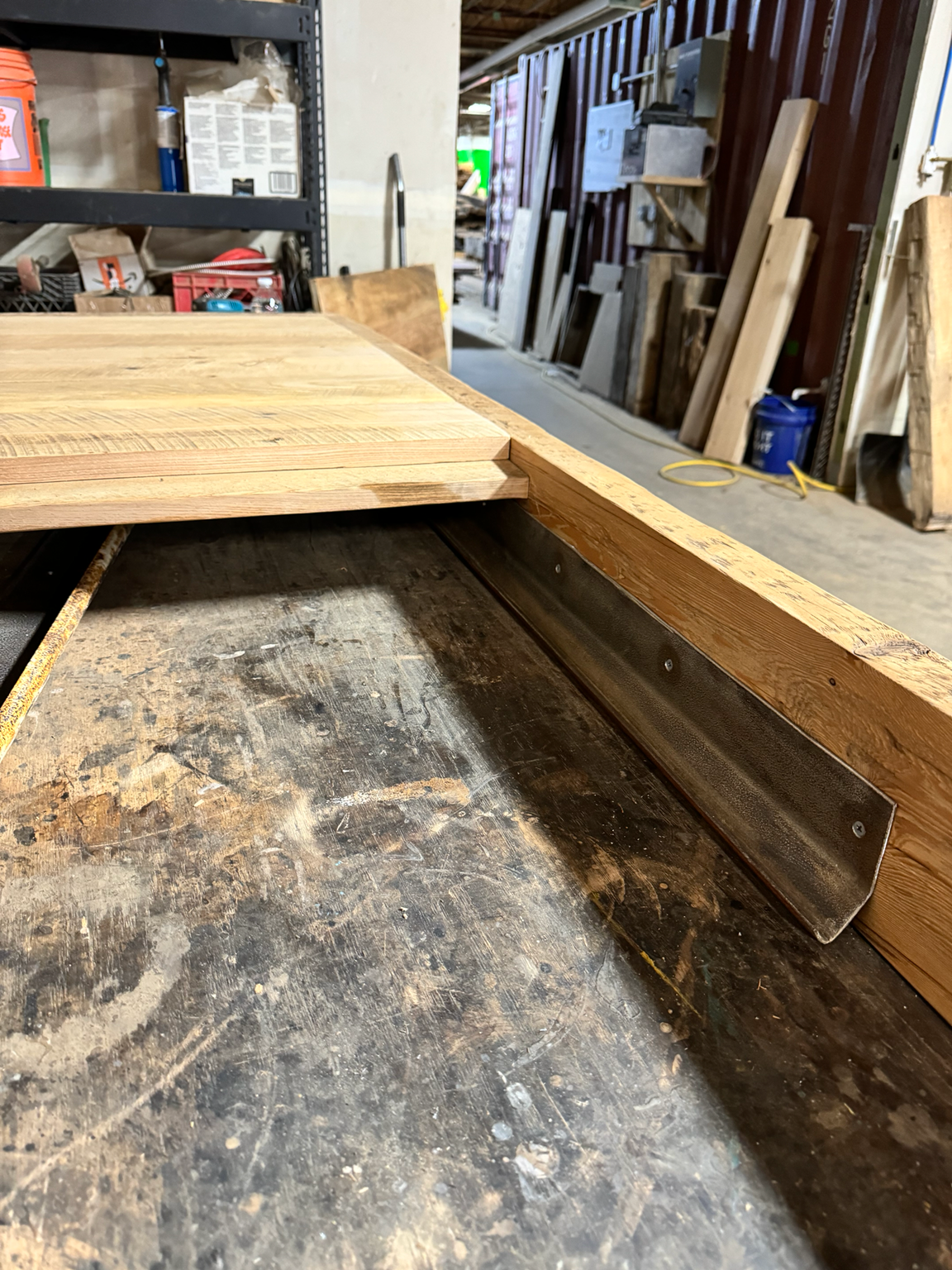
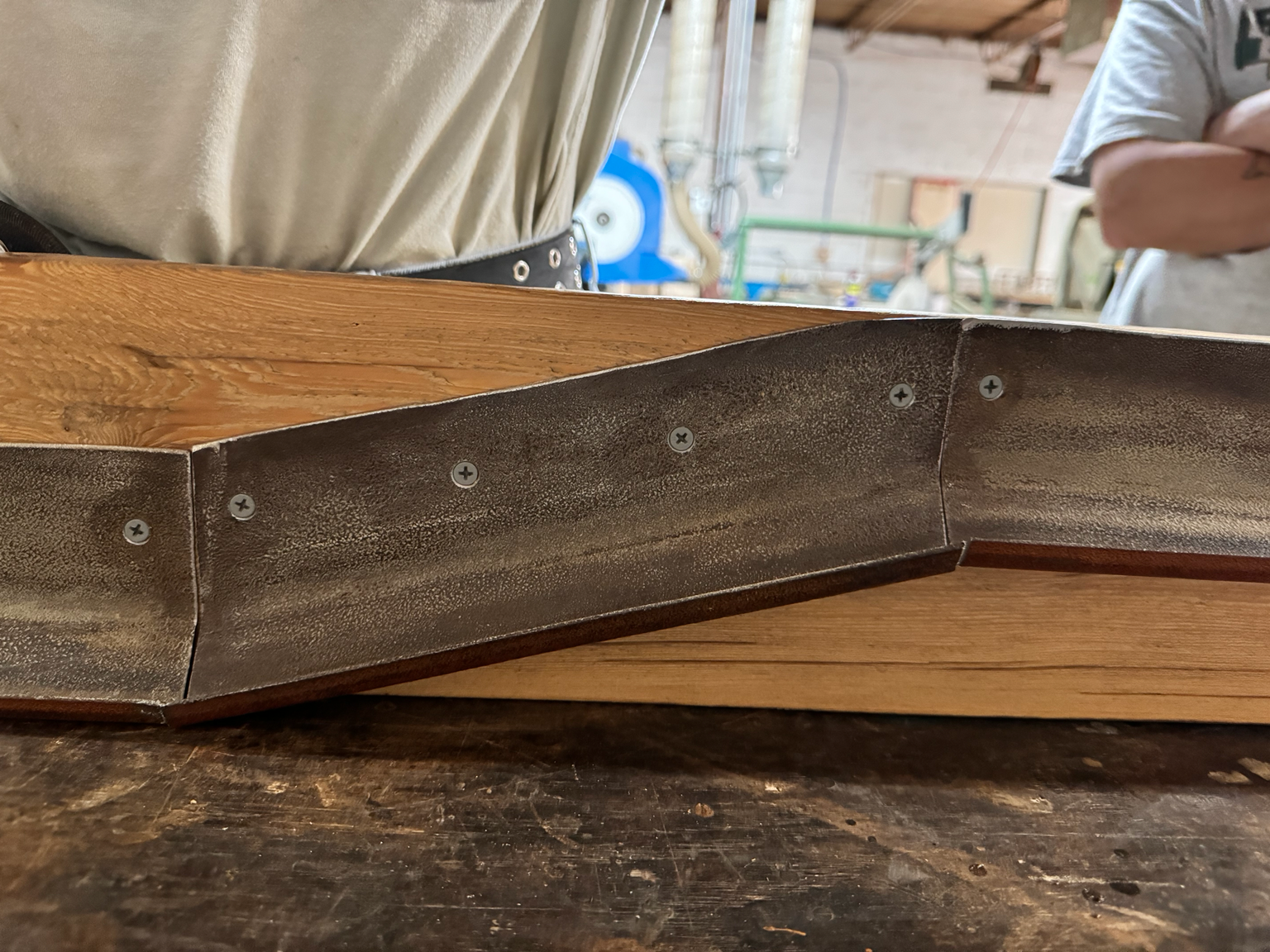
Track geometry and material selection were refined to maximize countertop extension while preserving comfortable circulation along the staircase below.
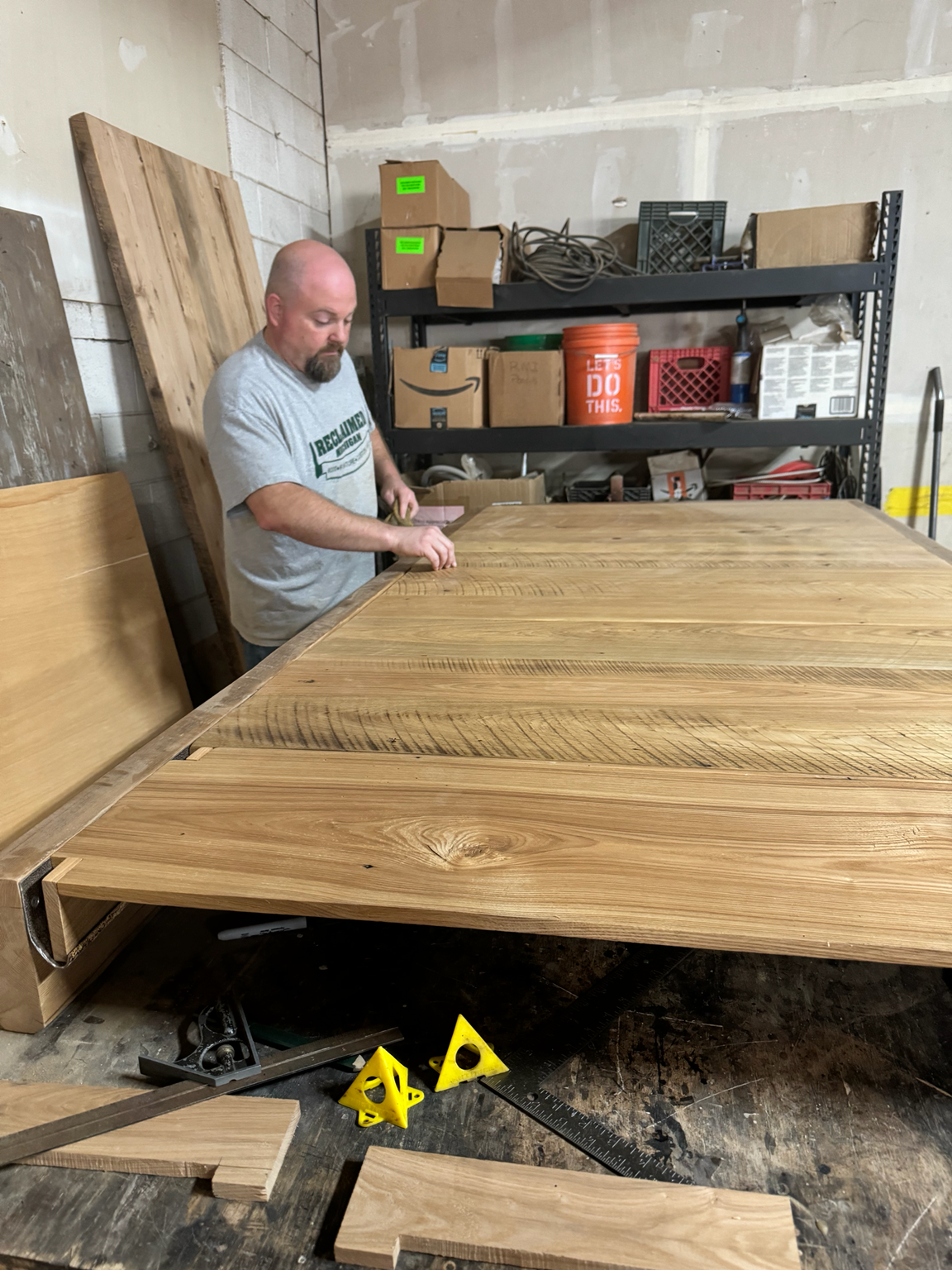
Final assembly and functional testing prior to installation. A removable extension leaf was developed to bridge the remaining span of the stair enclosure, allowing the countertop to extend the full length of the space when deployed.
Steel Base System
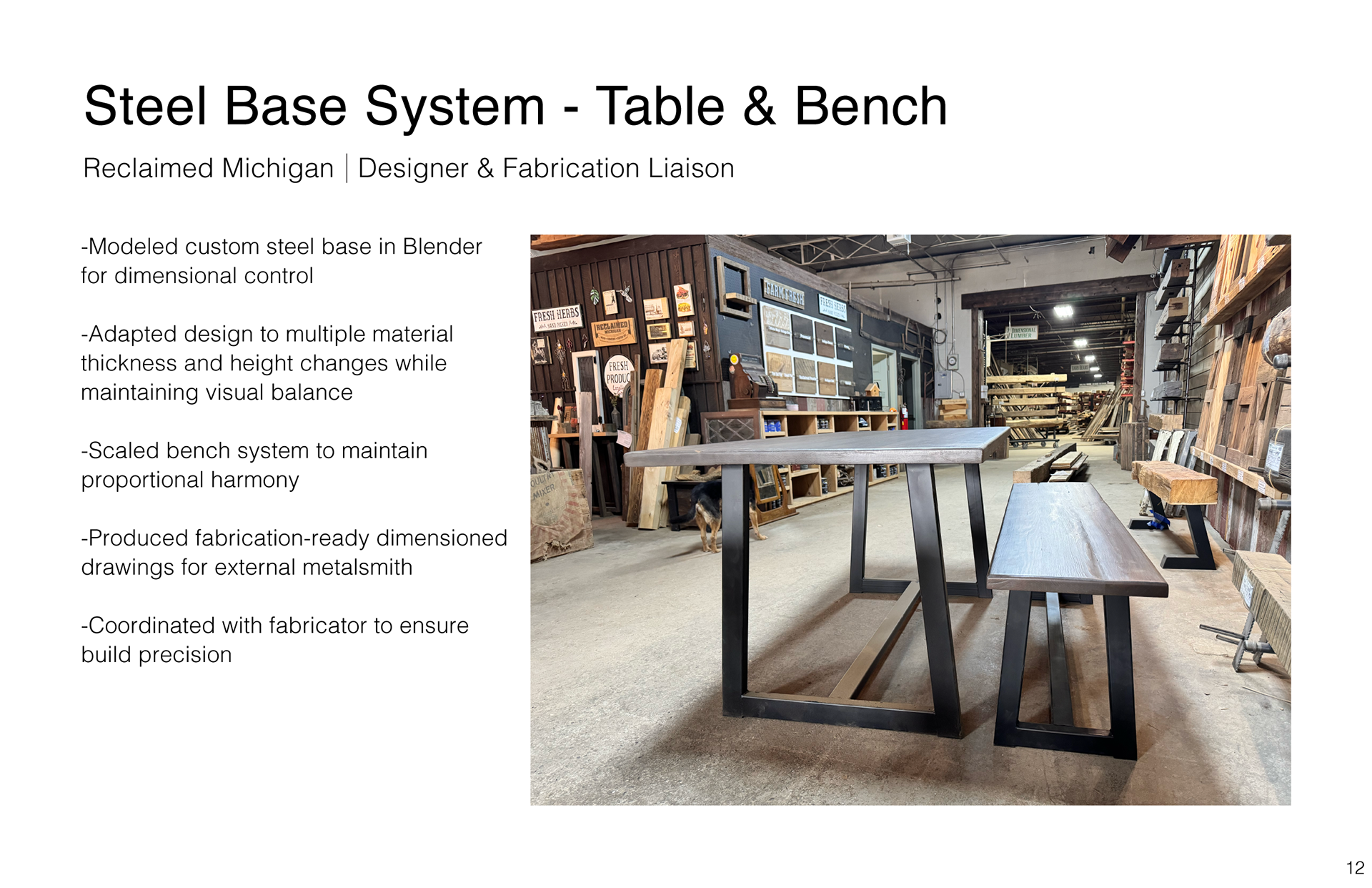
Developed for a custom furniture project at Reclaimed Michigan, this steel base system was designed to support a dining table and matching bench while maintaining a clean, balanced visual presence. As steel dimensions and fabrication requirements changed throughout the project, the design was continuously refined to preserve the intended proportions and overall design language.
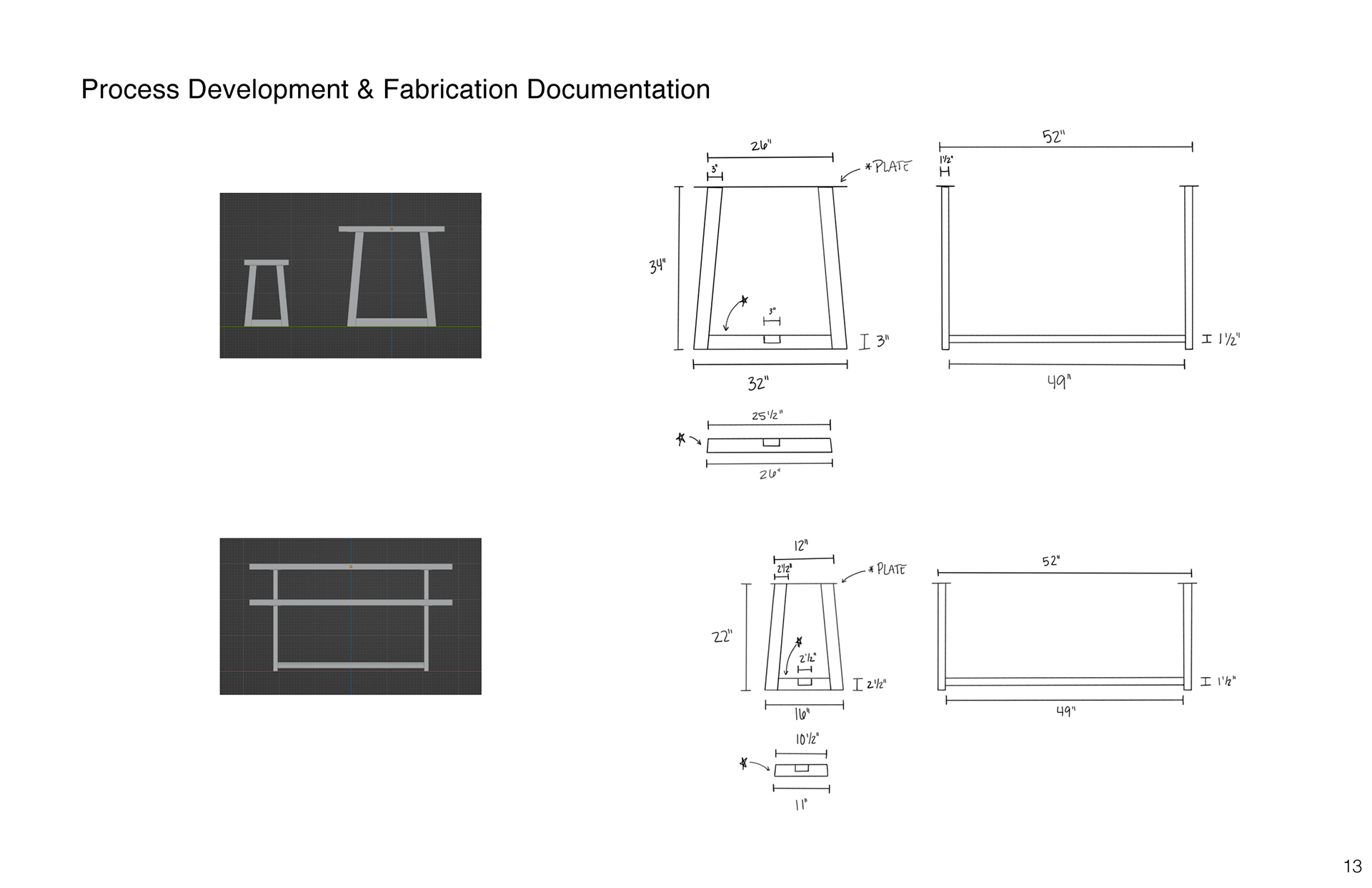
I developed the design in Blender and produced fabrication-ready documentation for an external metalsmith, ensuring dimensional accuracy throughout production. The final design successfully translated from digital concept to finished product, demonstrating the importance of technical communication and collaborative problem-solving within the manufacturing process.
Custom Bourbon Display
Developed for a residential client seeking custom shelving with integrated lighting, this concept was designed to transform a bourbon collection into a visual focal point. The shelving system uses interconnected elements to create a sense of movement while discreetly integrating lighting and wire management. Through collaboration with the client, the design evolved from routed wood connections to brass piping and overhead shelf lighting, resulting in a solution that balanced functionality, craftsmanship, and display aesthetics.
The original design incorporated routed channels hidden within the connecting elements to discreetly manage wiring and maintain a clean appearance. Following client feedback, the concept was refined to feature brass piping as the connecting element and routed lighting channels on the upper shelf surfaces to illuminate and highlight the displayed bottles. The final design demonstrates the balance between functional requirements, aesthetic intent, and client collaboration throughout the design process.
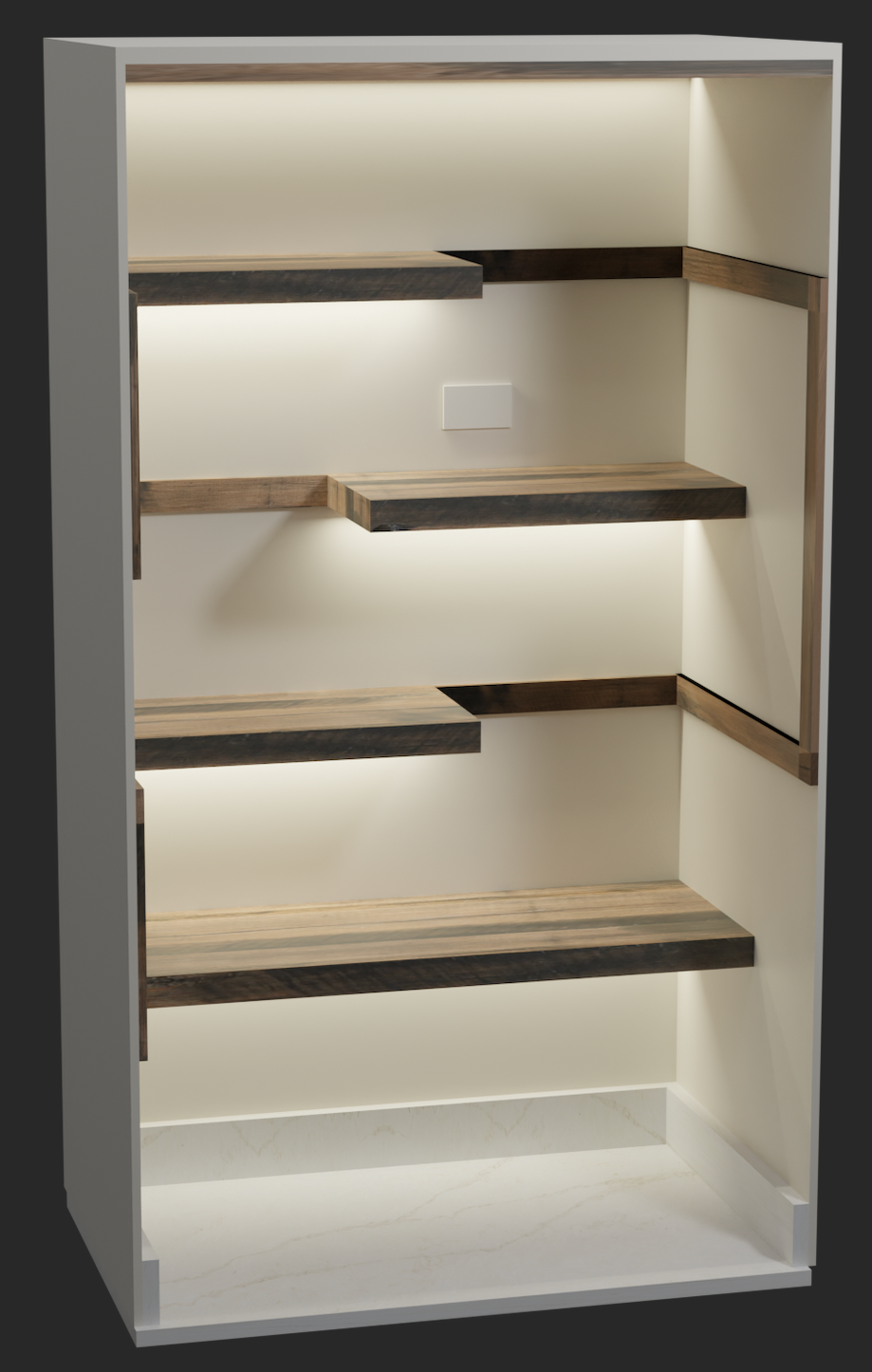
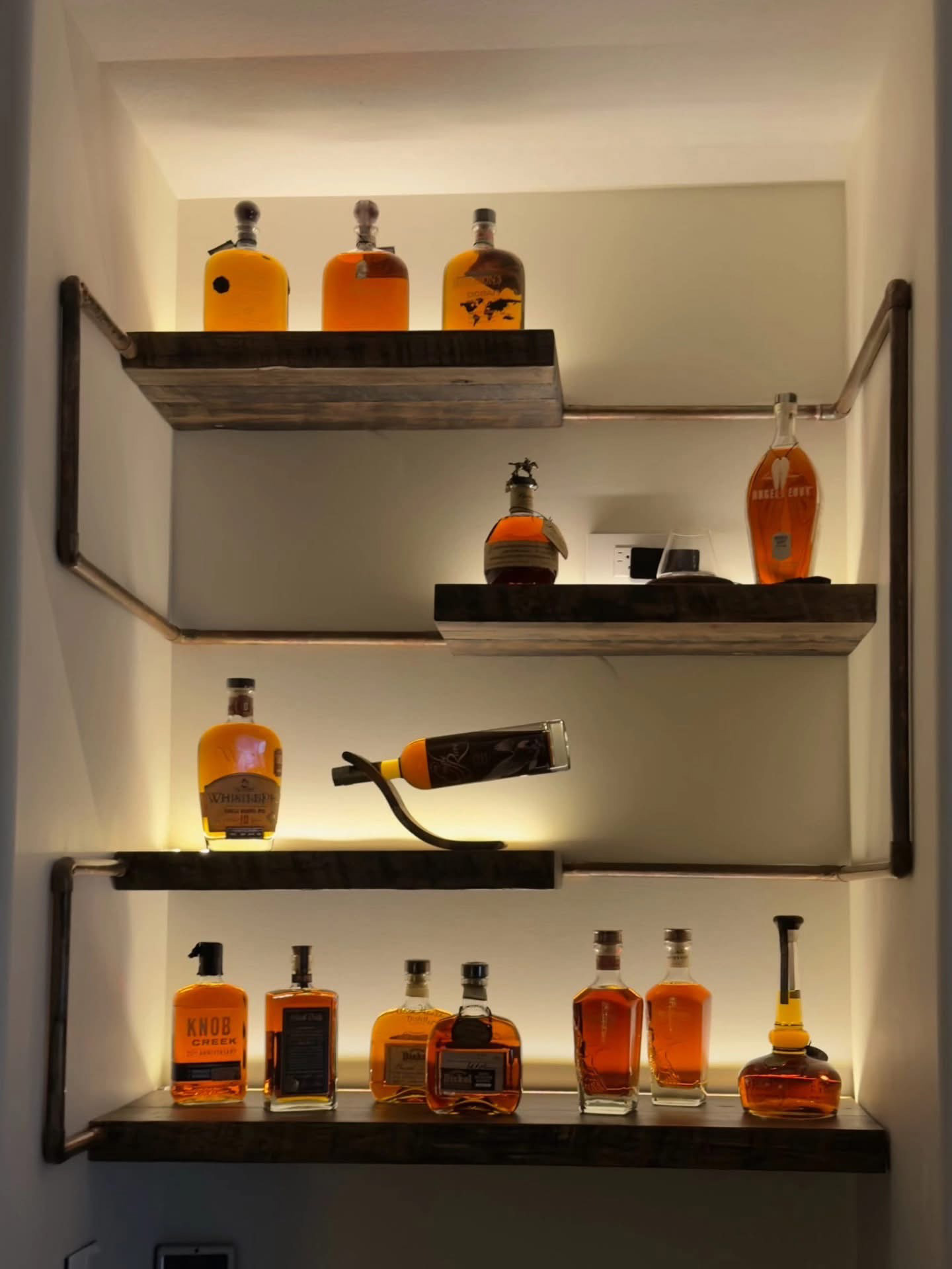
Concept visualization (left) and completed installation (right). The design was modeled to scale in Blender to communicate proportions, lighting placement, and material relationships prior to fabrication.
American Flag Installation
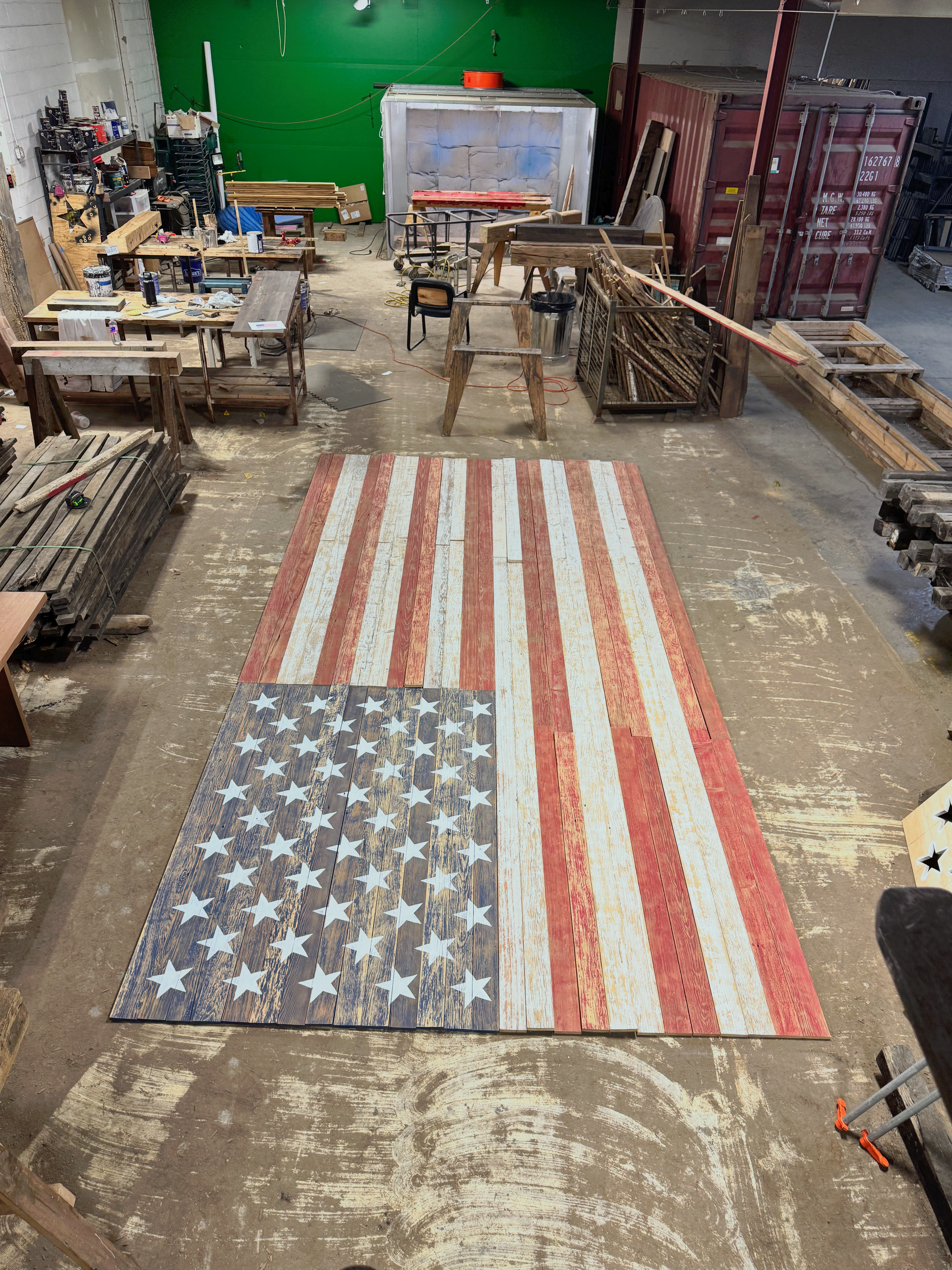
Designed and fabricated a large-scale American flag feature for a furniture showroom in Brighton, Michigan. Working within a 10’ × 18’ installation area, I developed the layout, construction plans, and full-scale templates required for production. The project involved translating a graphic symbol into a precise physical installation, requiring careful attention to proportion, scale, and visual impact within the showroom environment. From concept development through fabrication, I managed the design process, material sourcing, template creation, and hand-finished detailing to ensure accuracy at a large scale.
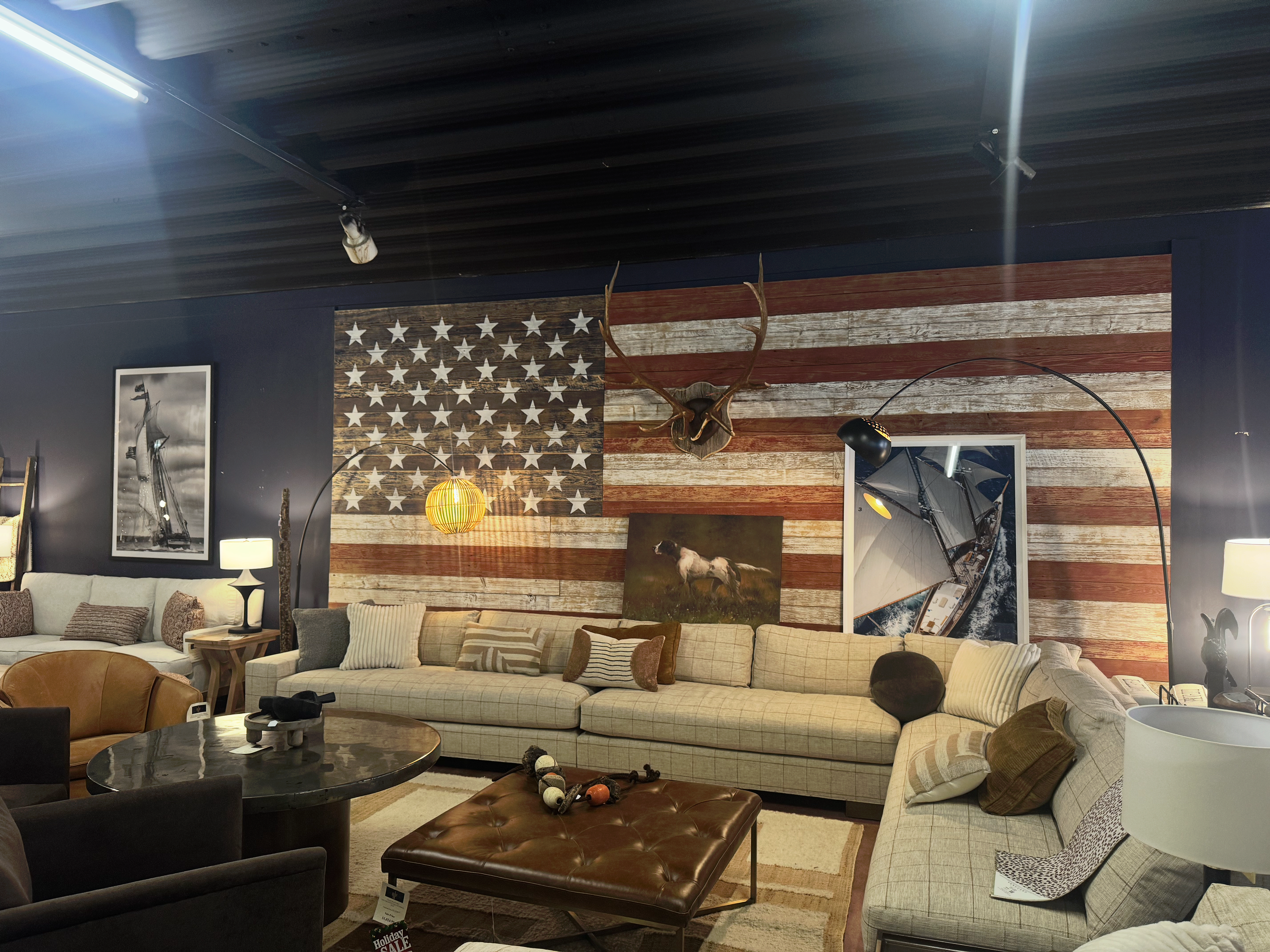
Installed as a permanent feature within the Brighton Furniture & Design showroom.
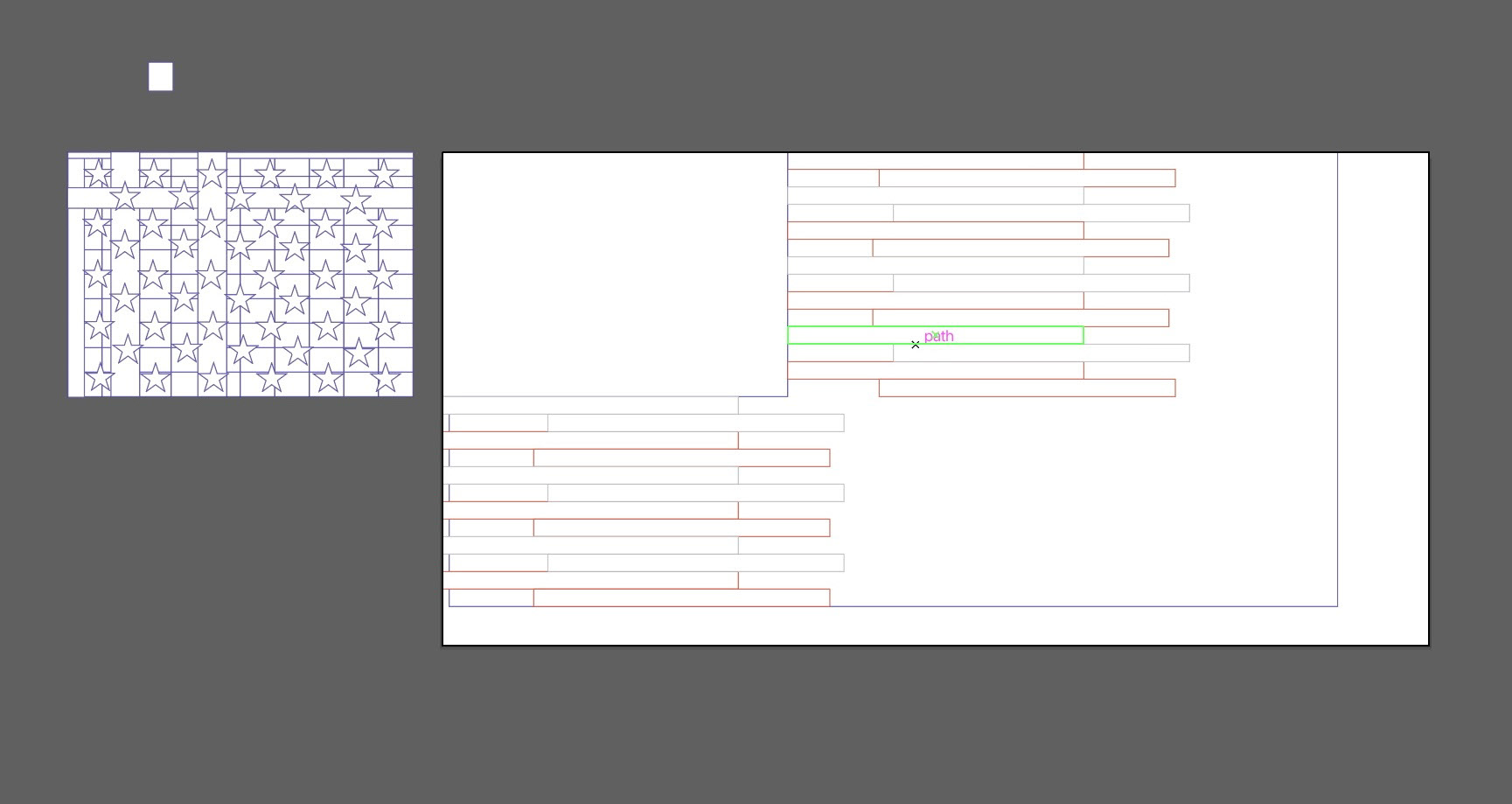
Digital planning and layout development were used to optimize material usage, create production templates, and ensure accuracy before fabrication began.
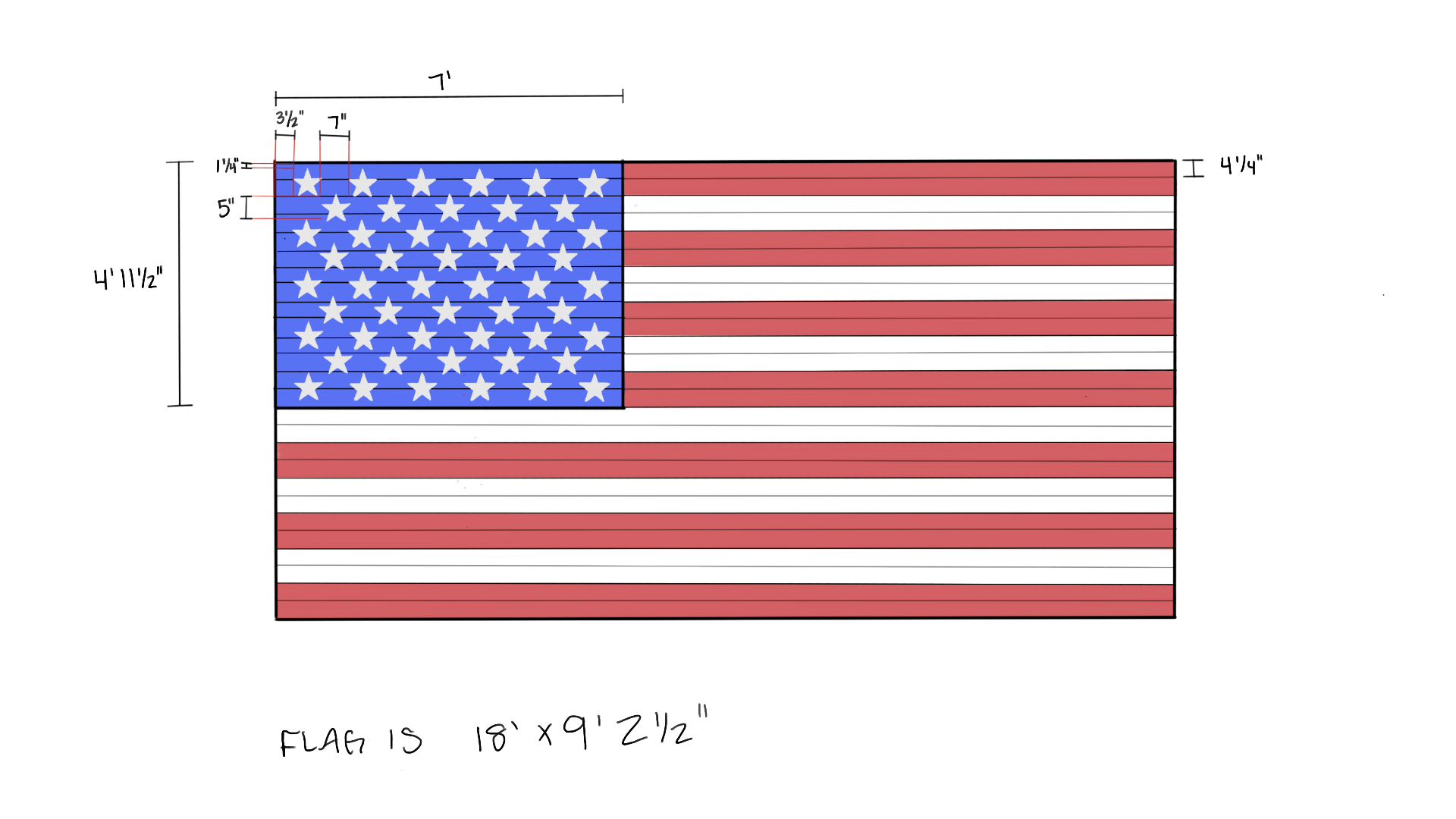
Detailed production documentation translated the concept into a manufacturable solution, providing clear dimensional guidance for fabrication and assembly.
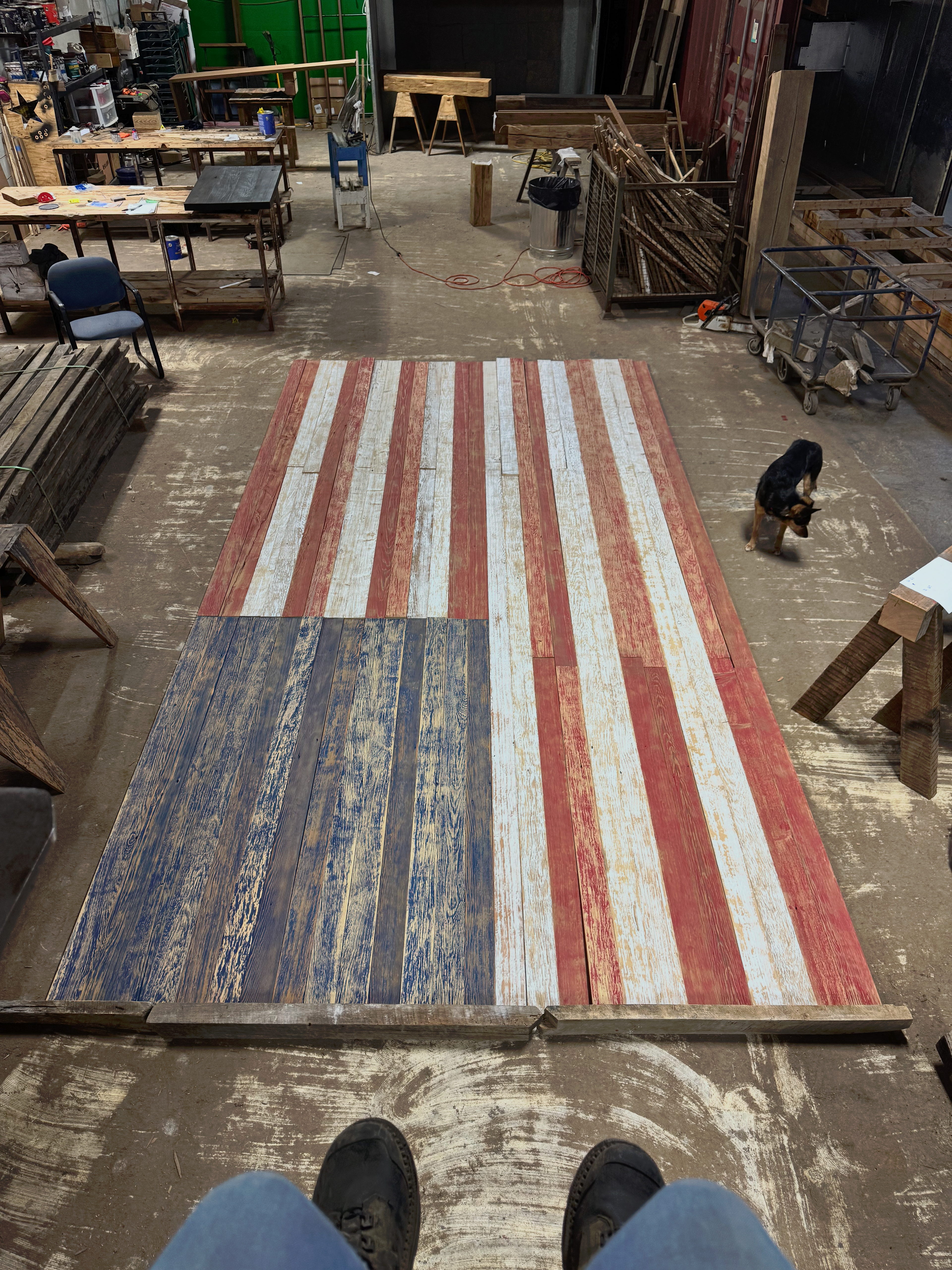
Early fabrication stage showing the completed panel layout and color application prior to final detailing and installation.
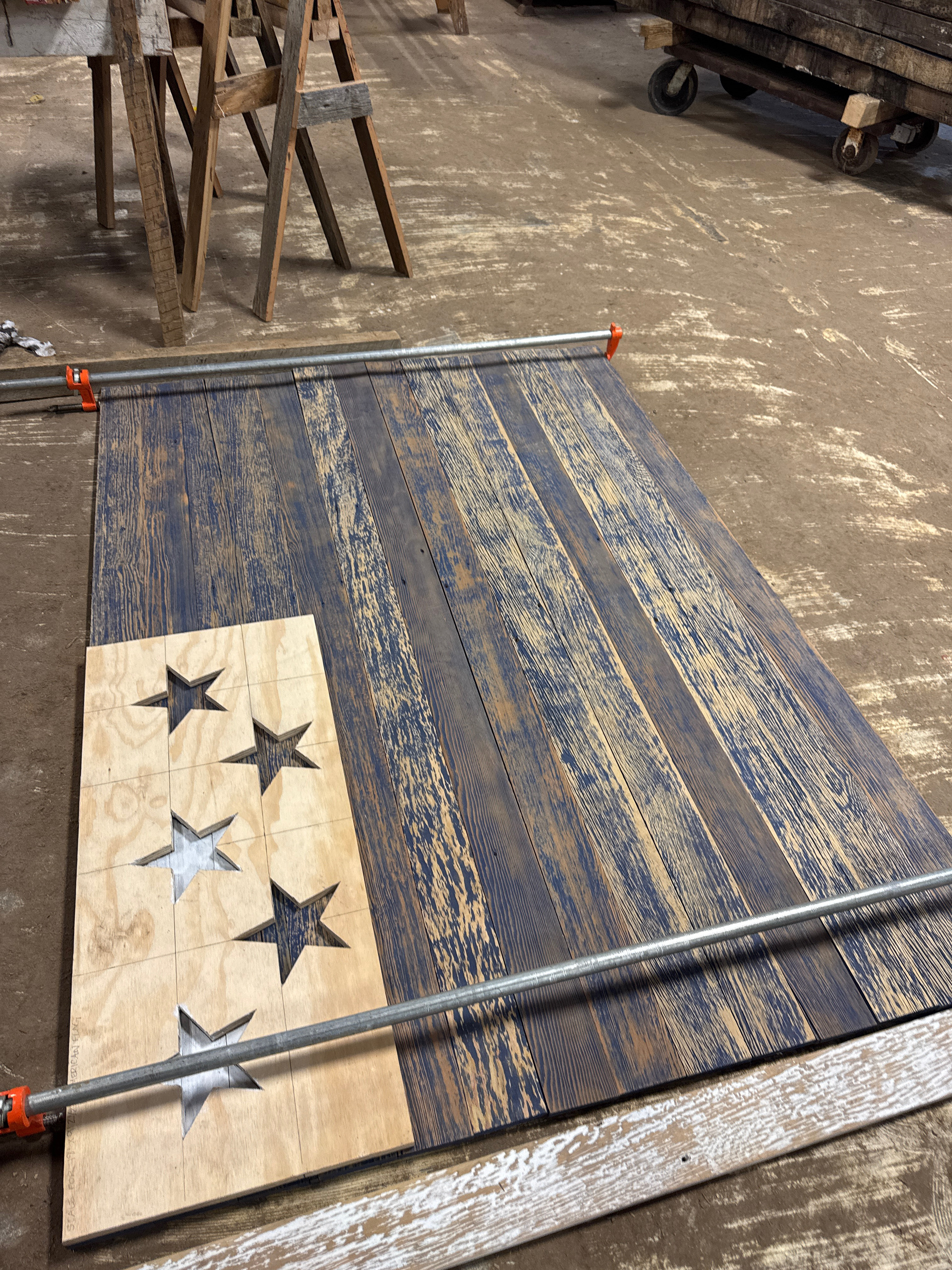
Detailed production documentation translated the concept into a manufacturable solution, providing clear dimensional guidance for fabrication and assembly.